
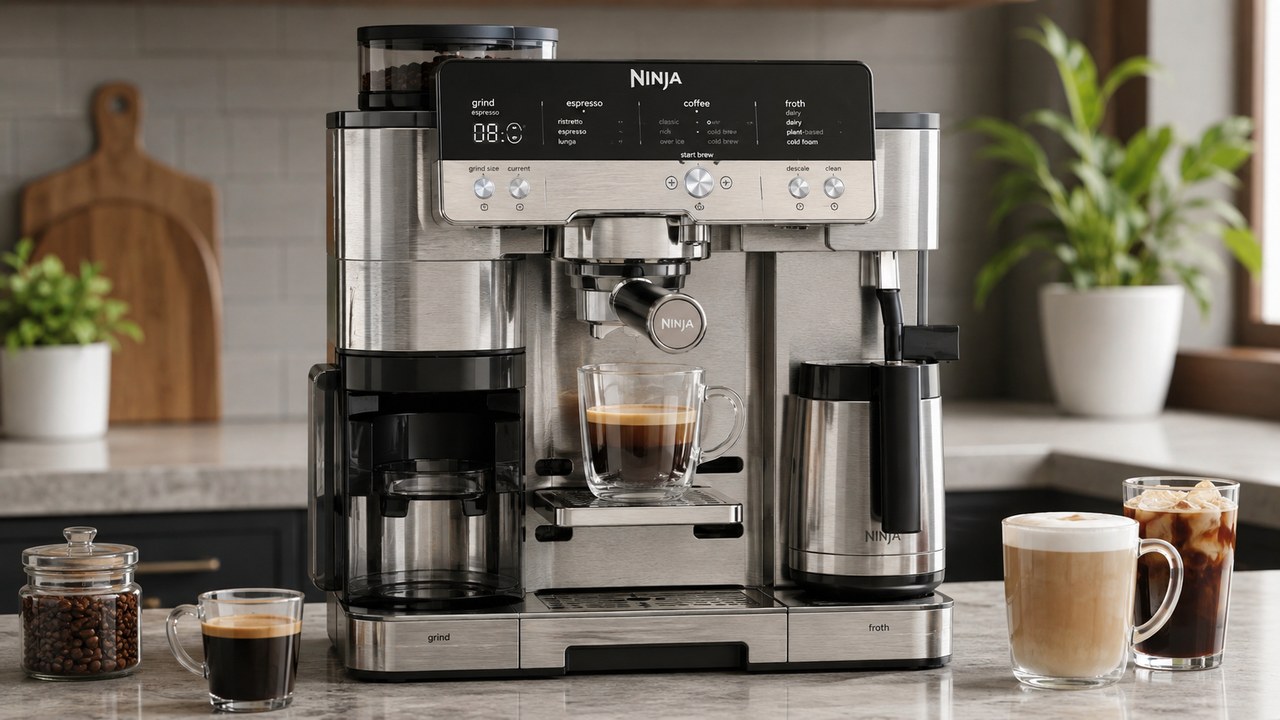
If your Ninja Luxe Café frother is not working, do not assume the steam system has failed immediately. On the Premier Series ES601, frothing depends on several things working together: the machine must be ready, the water reservoir must be seated correctly, the milk jug must be detected, the steam wand must be positioned correctly, and the wand opening must be clear.
The symptom also matters. A frother that will not start at all needs a different check from one that heats the milk but produces almost no foam. If other parts of the machine are also behaving strangely, start with our Ninja Luxe Café troubleshooting guide before focusing only on the frothing system.
Ninja Luxe Café frother problems at a glance
| Symptom | Check first |
|---|---|
| Frothing will not start | Warm-up, water level, reservoir seating, wand position and milk amount |
| Cycle starts and immediately stops | Milk jug position and whether the machine is detecting it correctly |
| Milk gets hot but does not froth | Froth selection, whisk movement, milk and steam-wand cleanliness |
| Milk stays cold | Cold Foam selection, steam flow and wand blockage |
| Foam is weak or very bubbly | Whisk, steam tip, milk type and selected froth level |
| Machine says to install the jug | Jug seating and the platform/contact area |
| No steam from the wand | Water supply and clogged steam tip |
| Problem remains after cleaning | Possible sensor, frother or internal steam-system fault |
1. Make sure the ES601 is ready to froth
If pressing the froth control does nothing, begin with the conditions the machine needs before starting a cycle.
- Allow the machine to finish warming up.
- Make sure the water reservoir contains at least the minimum amount of water.
- Remove and firmly reseat the water reservoir.
- Position the steam wand correctly inside the milk jug.
- Seat the milk jug correctly on its platform.
- Make sure the jug contains enough milk for the frothing cycle.
These checks may sound basic, but they matter because the ES601 does not use a simple independent steam wand. Its hands-free DualFroth system coordinates steam, the milk jug and whisking, so a missing condition can prevent the automated cycle from starting.
2. Check whether the machine detects the milk jug
A useful clue is an INSTALL JUG message or a frothing cycle that refuses to begin even though the jug appears to be in place.
Remove the jug completely and inspect both the bottom of the jug and the platform where it sits. Wipe away milk residue, water and coffee grounds, then dry the area and place the jug back down squarely.
Do not use force or wedge the jug against the machine. If the ES601 repeatedly fails to recognize its original jug despite the contact area being clean and the jug being positioned correctly, that starts to point away from normal user setup and toward a detection or hardware problem.
3. Clean the steam wand tip
A clogged steam wand is one of the most important things to rule out when the frother used to work but now produces weak steam, cold milk or poor foam.
Milk residue can dry inside a small steam opening even when the outside of the wand looks clean. The ES601 includes a cleaning tool designed for this job.
- Turn the machine off and allow the steam wand to cool.
- Remove the steam-wand tip using the appropriate part of the supplied cleaning tool.
- Use the cleaning needle to clear the opening in the tip.
- Rinse the removable tip thoroughly.
- Reinstall it securely before using the frother again.
Do not enlarge the steam opening with a drill bit, large needle or improvised metal tool. The goal is to remove residue, not change the dimensions of the nozzle.
4. Check the whisk inside the milk jug
The Ninja Luxe Café does more than inject steam. Its frothing system also uses whisking to create the intended milk texture. That means a steam wand can appear to be working while the final result is still little more than hot milk.
Inspect the whisk in the milk jug and make sure dried milk is not restricting its movement. Remove any detachable parts that Ninja intends to be removed for cleaning, wash away milk residue and reinstall them correctly.
If the whisk is physically stuck, do not continue running repeated froth cycles hoping it will free itself. Clean the mechanism first.
5. Make sure you selected an actual froth setting
The ES601 provides different hands-free milk options, and they are not supposed to produce the same result. The Premier model offers steamed milk, thin froth, thick froth and cold foam.
If the machine heats milk but creates much less foam than expected, check the selected setting before treating that behavior as a fault. Steamed milk is intentionally different from a thicker froth setting.
Likewise, Cold Foam is not supposed to produce hot milk. If the frother works normally on a cold setting but you were expecting heated foam, switch to the appropriate hot froth option before troubleshooting the heating system.
Check the DAIRY or PLANT-BASED milk setting
The ES601 also needs to know what type of milk you are frothing. Before starting an automatic froth cycle, use the MILK TYPE button to select either DAIRY or PLANT-BASED.
This matters because dairy milk and plant-based alternatives do not behave the same way when heated and aerated. If the wrong milk type is selected, the result can look like poor frother performance even though the steam system itself is working.
- Select DAIRY when using conventional dairy milk.
- Select PLANT-BASED when using oat, almond, soy or another plant-based milk.
- Then select the desired froth style and run a fresh cycle.
The setting cannot make every milk produce identical foam, because protein, fat and formulation still matter, but it should be correct before diagnosing weak or inconsistent frothing as a hardware problem.
Increase the froth temperature with setting h07
If the frother works and produces foam but the milk is consistently cooler than you want, the ES601 has a separate froth-temperature adjustment. This is different from the brew-temperature setting used for espresso and coffee.
- Press and hold the SIZE button for about 3 seconds to open Additional Settings.
- Turn the center dial until _h07 is displayed.
- Select the froth-temperature setting.
- Choose LO, M or HI. Medium is the default.
- Confirm the selection and exit the settings menu.
Try HI before assuming a normally functioning frother has a heating fault. This adjustment is particularly relevant when the machine still produces good steam and foam but the final milk temperature is lower than expected.
If the milk remains barely warm on a heated froth setting even at HI, and the steam wand has already been cleaned, the problem is no longer explained simply by the temperature preference.
6. If the milk heats but will not froth
If the jug becomes hot but the milk remains flat, separate the steam side from the texture side of the problem.
- Confirm that you selected thin or thick froth rather than plain steamed milk.
- Check that the whisk is installed correctly and can move freely.
- Clean the jug thoroughly so dried milk cannot interfere with the whisk.
- Clean the steam-wand tip even if some steam is still coming through it.
- Try fresh, cold milk before concluding that the machine itself is defective.
A partial blockage can be especially confusing because it does not always produce a complete loss of steam. The machine may still heat the milk while delivering poorer texture than it did previously.
7. If the frother runs but the milk is not hot enough
First confirm that Cold Foam is not selected. If you are using a hot froth setting and the milk is still unusually cool, clean the steam-wand tip before making other changes.
Compare the result with the machine’s previous behavior rather than with milk from a café that may have been manually steamed to a different temperature. The important troubleshooting clue is a meaningful change: for example, the same machine, milk and setting previously produced hot foam but now consistently leave the milk barely warm.
If steam output is obviously weak after the wand has been cleaned and the reservoir is full and correctly seated, the problem may be beyond normal cleaning.
8. If the frothing cycle starts and stops almost immediately
A cycle that begins and then jumps rapidly to the end deserves different attention from weak foam. Recheck jug detection, water supply, milk level and wand position first.
Turn the machine off normally, let it settle, then restart it and try one properly prepared frothing cycle. Avoid repeatedly hammering the froth control if each attempt ends in exactly the same way.
If the machine consistently recognizes all components but the automated cycle still terminates almost immediately, particularly after it previously worked normally, contact Ninja rather than dismantling the frothing system. Owners have reported this type of behavior with units that ultimately required manufacturer support or replacement, but individual reports do not prove that every machine with the symptom has the same defect.
9. Does the type of milk matter?
Yes, milk can change foam quality, but it should not be used to explain every frother problem.
Different dairy and plant-based milks contain different amounts of protein, fat and stabilizers, so two products can produce noticeably different foam on the same machine. Fresh, cold milk is a useful baseline when diagnosing weak texture.
However, if the frother worked consistently with the same milk and suddenly stopped producing heat or foam, changing milk brands should not be your only troubleshooting step. Check the wand, whisk and jug detection as well.
10. Run the normal purge and cleaning routines
Milk systems need more frequent attention than parts that only contact coffee or water. Wipe the steam wand after use and allow the machine to complete its normal purge behavior rather than leaving milk residue to dry inside the tip.
The milk jug and whisk should also be cleaned before residue can harden around moving or contact areas. A frother that receives only occasional deep cleaning can develop problems even when the rest of the espresso machine appears spotless.
Descaling and milk-system cleaning solve different problems. Descaling addresses mineral deposits in the water path; it is not a substitute for physically removing dried milk from the wand tip, jug or whisk.
When the Ninja Luxe Café frother probably needs service
Basic troubleshooting has a sensible stopping point. The ES601 contains electrical components, heating hardware, valves and internal pressurized-water connections that are not routine owner-service items.
- The machine repeatedly fails to detect the original milk jug even when it is correctly seated and the platform is clean.
- The frothing cycle consistently stops almost immediately after starting.
- There is no useful steam after the tip has been properly cleaned and the water supply has been verified.
- The whisk never operates despite being clean and correctly installed.
- An Er code appears during frothing.
- There is an internal leak, burning smell, abnormal overheating or another electrical symptom.
For those symptoms, note exactly what happens when you press the froth control, whether the machine detects the jug, whether steam is produced and whether any code appears. That information will be much more useful to Ninja support than simply reporting that the frother is broken.
Start with the part of the frothing system that actually failed
The most efficient way to fix a Ninja Luxe Café frother that is not working is to identify what has disappeared: starting, steam, heat, whisking, jug detection or foam quality.
If the cycle will not start, check machine readiness, water, milk and component positioning. If the milk heats but stays flat, focus on the froth selection, whisk and wand cleanliness. If the same automated cycle repeatedly stops after a second or two despite all of those checks, that is the point where further cleaning becomes less useful and manufacturer support becomes the more sensible next step.